
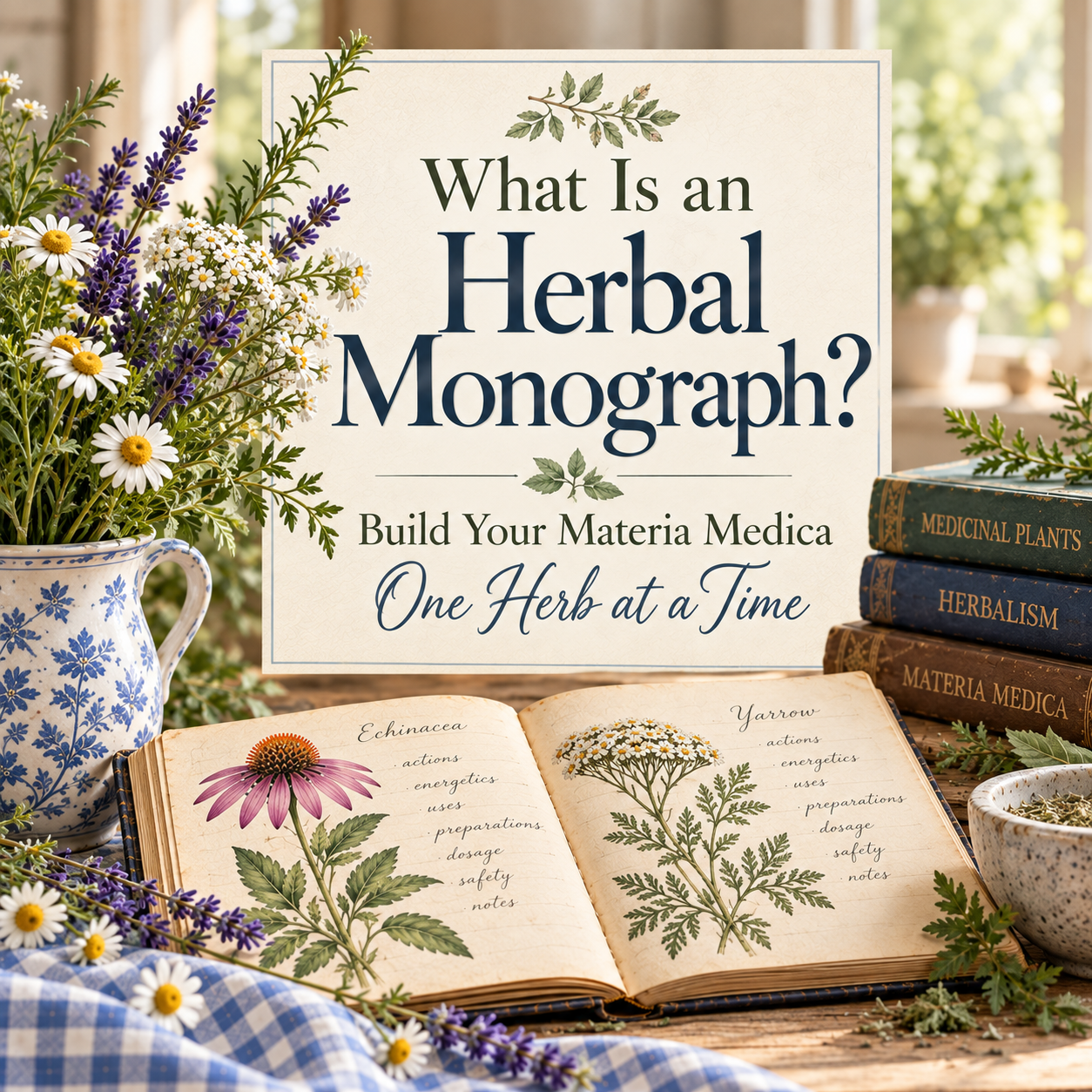
Build Your Materia Medica One Herb at a Time
If you are learning herbalism, it doesn't take long before you come across the word monograph. Maybe you've seen herbalists offer monographs, found them in books or courses, or heard someone say, “Look that herb up in your materia medica.” But what exactly is an herbal monograph, and why would you want to use one?
The simplest answer is that an herbal monograph is an in-depth profile of one herb. It brings the important information about a medicinal plant together in one place so that you can begin to understand the plant as a whole, rather than simply memorizing a list of things it is “good for.”
One Herb at a Time
One of the easiest ways to become overwhelmed when learning herbalism is trying to learn too many herbs at once. There are hundreds of medicinal plants, and you do not need to know them all. Instead, choose one and spend some time getting to know it.
Learn its common and botanical names and which parts are used. Discover what it tastes and smells like. Study its herbal actions and energetics. Learn how it has traditionally been used, how it is commonly prepared, and what safety considerations you need to know. Then, when you're ready, move on to another herb.
This is where a good monograph becomes such a helpful learning tool. It gives you a framework for studying each plant so that you aren't simply collecting random pieces of information from books, websites, classes, and social media.
What Is Included in an Herbal Monograph?
There isn't one universal format that every herbalist follows. Some monographs are only a page or two, while others are quite extensive. A full monograph will generally include information such as the botanical and common names, plant family, parts used, botanical description, native region and geographic distribution, herbal actions, constituents, energetics and flavors, traditional and current uses, preparations, dosage, safety information, contraindications, and references for further study.
At first, some of these sections can look intimidating, especially when you begin encountering unfamiliar herbal actions or plant constituents. You don't need to memorize all of it. The monograph is there to help you study.
As you work through more monographs, much of this terminology will begin to repeat. The word demulcent may be completely new the first time you encounter it. Later, you'll see it again with another plant, and eventually you'll begin recognizing an entire group of herbs that share that action. The same thing happens with energetics, constituents, preparations, and plant families. Little by little, the pieces begin fitting together.
A Monograph Is More Than a List of Uses
This is where I think monographs become particularly valuable. It's very easy to learn herbalism as a collection of lists: herbs for sleep, herbs for digestion, herbs for stress, herbs for coughs. Those lists can certainly be useful, but they don't necessarily teach us why we would choose one herb over another.
A monograph helps us ask better questions. What does this herb actually do? Is it warming or cooling? Drying or moistening? What are its primary herbal actions? What body systems does it seem to have an affinity for? What makes this plant different from another herb that might be used for something similar?
And one of my favorite questions to ask when studying a plant is:
When would I think of this herb?
That question moves us beyond simply memorizing what an herb is “for” and toward actually getting to know the plant. If several herbs are considered nervines, for example, I don't just want to know that they all support the nervous system. I want to begin understanding what makes each one distinct and why I might think of one before another.
Monograph or Materia Medica?
You'll often hear the terms monograph and materia medica used together, and the distinction is fairly simple. A monograph is the individual study or profile of one plant. A materia medica is the larger collection of information about medicinal plants.
So every time you complete another herbal monograph and add it to your collection, you are building your materia medica—one herb at a time.
Your materia medica can grow right alongside your knowledge. In fact, I think that's one of the beautiful things about keeping an herbal reference. The notes you make when you're first learning a plant may look very different from what you add five or ten years later after you've grown it, prepared it, read more about it, and worked with it yourself.
How Do You Study an Herbal Monograph?
I wouldn't recommend sitting down with a monograph and trying to memorize every word. Read through it once simply to become familiar with the plant. Then go back through it more slowly. Look up terminology you don't understand, notice the plant's primary actions and energetics, and pay attention to the uses that seem particularly characteristic of that herb. Learn which preparations are commonly used, and don't skip over the dosage and safety sections.
After you've spent some time with it, close the monograph and see what you can explain in your own words. What kind of herb is this? What are its primary actions? When might you think of it? How is it commonly prepared? Is there an important safety consideration you should remember?
You don't have to remember every constituent, every historical use, or every preparation to begin knowing a plant. You can come back to the monograph again and again as your knowledge grows. In fact, you may be surprised by how much more you see in it after you've spent some time actually working with that herb.
If you'd rather sit down and learn this with me, I recently taught a full class on
What Is an Herbal Monograph?
In the video, we walk through the different parts of a monograph, talk about herbal actions, constituents, energetics, preparations, safety, and—most importantly—how all of those pieces help us move beyond memorizing lists and begin to really know our herbs.
Watch the teaching below, and then download the free monograph to begin building your own materia medica.
Download a Free Herbal Monograph
If you'd like to put this into practice, I've created a free Herbal Monograph PDF that you can use as you study. You can print a copy for each medicinal plant you want to learn and use it as a framework for gathering your research, references, and personal notes.
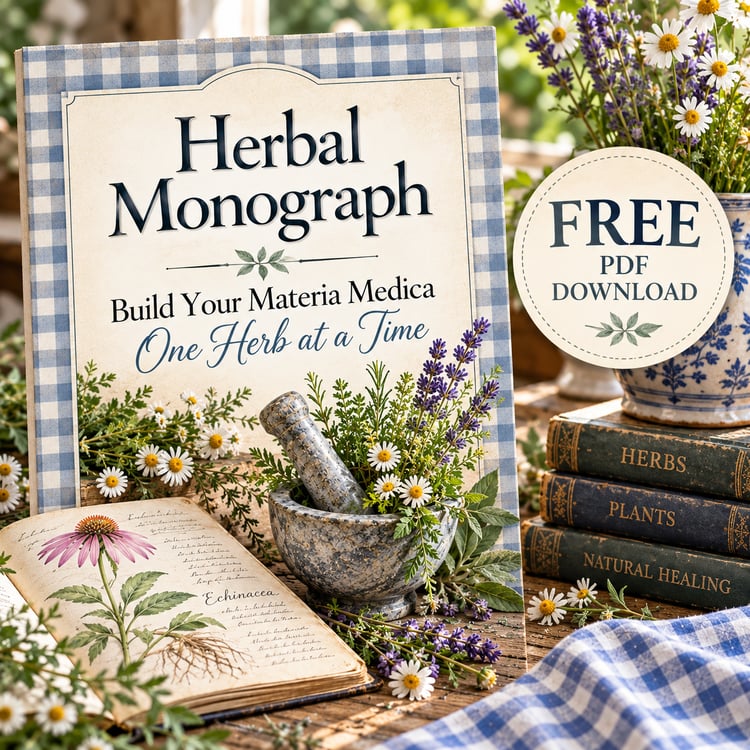
DOWNLOAD THE FREE HERBAL MONOGRAPH
You don't have to learn every herb before you can begin using the knowledge you're gaining. Start with one plant and learn it well. Then learn another. Over time, you'll begin recognizing the same actions, energetics, constituents, preparations, and patterns showing up again and again.
That's how you build your materia medica—one herb at a time.
And, more importantly, it's how you begin to truly know your herbs.
Until next time,
JeriAnne
Comments ()